
Why Technical SEO and Performance Matter So Much
Technical SEO and performance play a huge role in how fast a website loads and how users experience it. Imagine you cooked an amazing five-course meal. Everything is perfect — taste, look, even the smell. But there’s one problem. Your guests have to wait in a small, uncomfortable hallway for three hours before they even sit down. By the time they finally reach the table, they’re not excited anymore… they just want to leave.
That’s exactly how websites feel when they are slow.
Your content is the meal, and technical SEO and performance are that hallway. If your site is slow, messy, or confusing, people will leave before even seeing your hard work. In 2026, speed is not just important — it’s everything. It helps search engines find your site, read it, and show it in results. If this part is broken, nothing else really works properly. It’s like having a fancy car that doesn’t start — looks nice, but useless.
You can also read our guide on SEO basic guides for better understanding.
Understanding Technical SEO Basics
People often think SEO is only about keywords and backlinks. Yes, those matter. But honestly, they are just the outer look. Technical SEO is the main system behind everything.
It helps search engines find your site, read it, and show it in results. If this part is broken, nothing else really works properly. It’s like having a fancy car that doesn’t start — looks nice, but useless.
Performance and User Experience Are Connected
Have you ever opened a site and stared at a blank screen for like 5 seconds? Feels very long, right?
That’s because people expect things instantly now. A fast website feels trustworthy and professional. A slow one feels outdated or even unsafe.
So yeah, speed is not just technical stuff — it directly affects how users feel about your site.
Core Web Vitals for Technical SEO and Performance
Google made things more clear by introducing Core Web Vitals. These are like your website’s report card. If your scores are bad, your rankings will also suffer.You can learn more about Core Web Vitals on Google official website.
LCP (Largest Contentful Paint)
This checks how fast the main content appears on screen. Usually it’s a big image or heading.
If it takes more than 2.5 seconds, it’s not good. To fix it, you should focus on loading the main content first, not small details.
INP (Interaction to Next Paint)
This one is about how fast your site responds when someone clicks or taps.
If you click a button and nothing happens for a second, that’s bad INP. To improve it, your JavaScript should be clean and not too heavy.
CLS (Cumulative Layout Shift)
This measures how much your page moves while loading.
Like when you try to click something and suddenly it shifts — very annoying. To fix this, always give proper size to images and ads so the layout stays stable.
Improving Technical SEO and Performance Infrastructure
Even if your code is perfect, bad hosting can ruin everything. A slow or overloaded server can delay how fast your pages load, no matter how well your site is optimized. That’s why your infrastructure — including hosting and delivery systems — plays a key role in technical SEO and performance.
Hosting Matters a Lot
Cheap hosting is often slow and unreliable. It might work for small projects, but not for serious websites. When your site shares resources with too many others, performance drops.
Switching to better hosting or cloud services can improve speed a lot. It’s one of the quickest ways to see real performance gains.
Using a CDN
A CDN stores your site in different locations around the world.
So if someone visits from far away, they don’t have to wait for data to travel long distance. It makes your site faster globally.
Mobile-First is Now Reality
Google mainly checks your mobile version now, not desktop.
If your mobile site is slow or poorly designed, your rankings will drop even if desktop is fine.
More Than Just Responsive Design
Making your site fit on mobile is not enough.
You also need to think about speed and data usage. Many users have slow internet, so heavy images or videos can hurt performance badly.
Advanced Optimization Tips
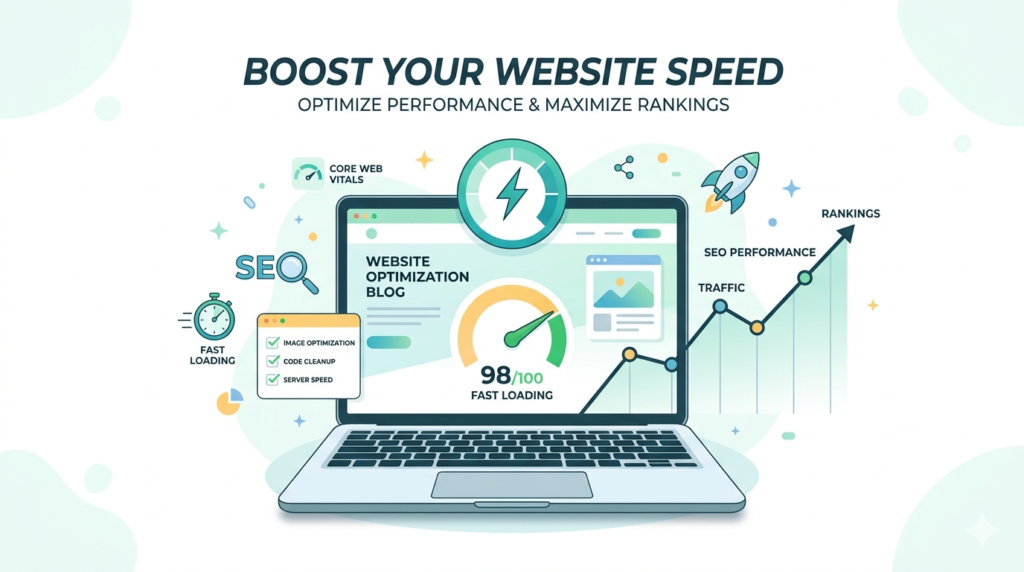
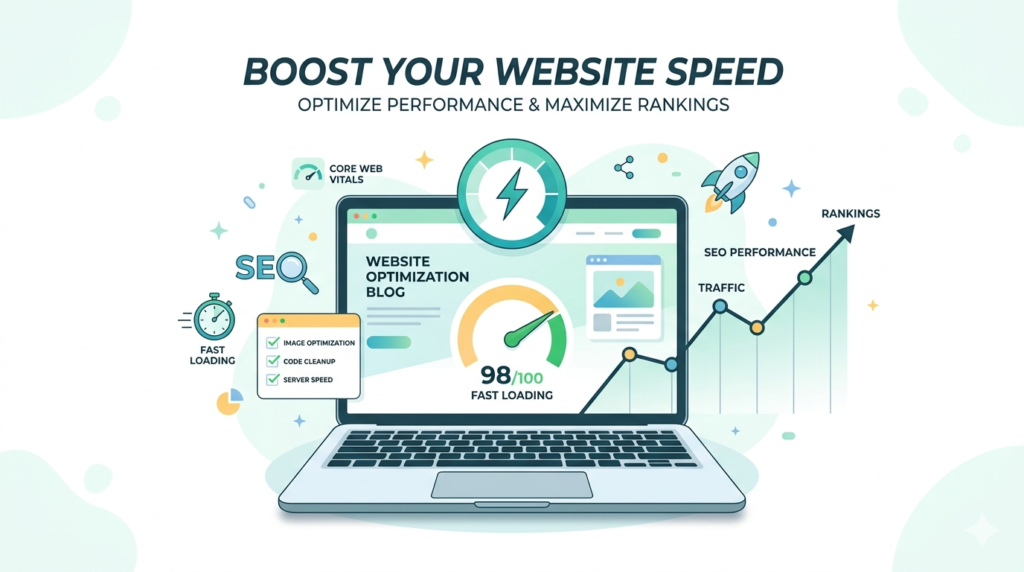
Once basic things are done, small improvements can make a big difference.These small changes may not look important at first, but together they can improve your site speed a lot. Even saving a few milliseconds in different areas can create a smoother and faster experience for users.
Better Image Optimization
Images take most of the space on a webpage.
Instead of just compressing them, use modern formats like WebP or AVIF. They are smaller but still good quality.
Minification and Bundling
Your code has extra spaces and comments for humans to read.
Minification removes all that unnecessary stuff. Bundling combines multiple files into one.
This reduces load time and makes things faster.
Crawl Budget and Efficiency
Search engines don’t spend unlimited time on your site.
If your site has errors or bad links, they waste time and might ignore important pages.
Fix Redirects and Errors
Too many redirects slow things down.
Broken links (404 pages) are even worse. Cleaning these helps search engines crawl your site properly.
JavaScript and SEO
Modern frameworks are powerful but sometimes hard for search engines to understand.
Using server-side rendering or pre-rendering helps bots see your content easily.
HTTPS is Important Too
HTTPS is not only about security.
It also allows faster technologies like HTTP/2 and HTTP/3. So having SSL actually improves performance as well.
Final Thoughts
Technical SEO is not something you do once and forget.
It needs regular work and updates. As technology keeps changing, speed will become even more important.
At the end, the websites that win are the ones that load fast and give smooth experience.
Because honestly, no one likes waiting. In the end, focusing on technical SEO and performance helps websites stay fast, stable, and user-friendly.