
How To Generate Leads with SEO: The Complete Lead Generation Strategy and the Roadmap to Turning Organic Traffic Into a Revenue Engine
In the long run, a well-crafted SEO lead generation strategy beats paid channels by compounding authority and lowering your cost-per-acquisition year over year. Compared to search ads, organic search achieves exposure that mirrors demand Search visitors often have mid-funnel consideration and are actively looking for solutions compared to passive scrollers.
This is the difference between brands that rank and brands that drive actual leads technical SEO content depth conversion architecture.
But for the most part, marketers see SEO and lead generation as two separate disciplines one owned by the content team, the other by growth or demand-gen squad. That is a basic structural error, and it manifests itself in the numbers. Inbound leads (including those from organic search and social media) were found to cost on average 61% less than outbound leads, according to HubSpot’s ongoing State of Marketing Report but many organizations continue to massively underinvest in the proper infrastructure required for effectively capturing them. A legitimate SEO lead generation strategy is not simply getting a page 1 ranking. It’s about architecting an environment where your content pulls in ideal visitors, establishes trust and methodically turns that attention into pipeline. This means matching your keyword targeting to actual buyer intent, building content assets that address the full funnel, and optimizing every landing experience in order to get friction out of the way the moment of conversion. When these three layers are combined, SEO is no longer a branding exercise but rather a reliable lead machine.
The SEO Funnel Strategy for Leads Explained
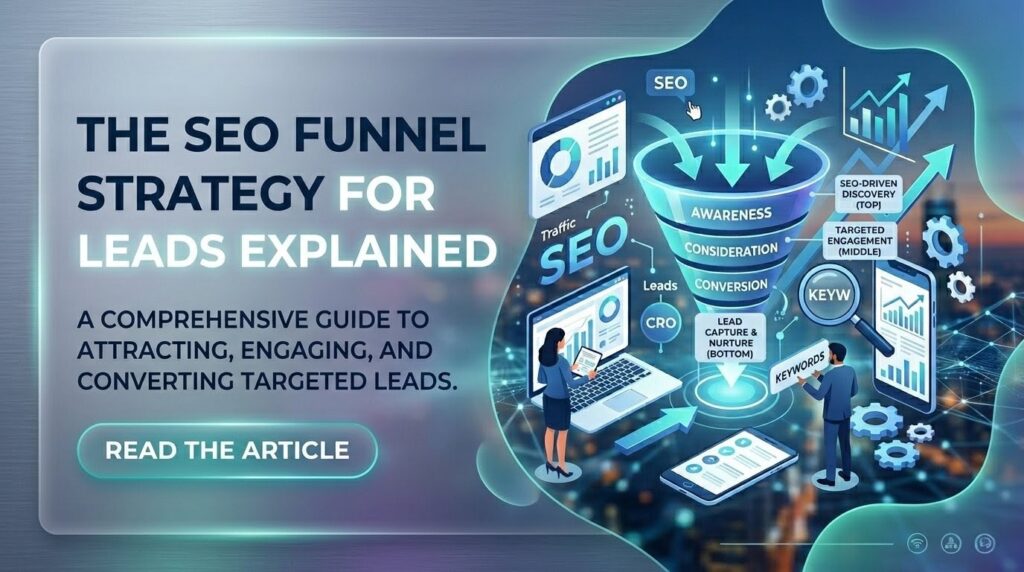
Top-of-funnel content essentially creates a foundation for brand awareness and attracting very high-volume, low-intent traffic that is still valuable in terms of remarketing potential but rarely leads to direct lead generation.
Most of lead generation through organic traffic occurs at the middle-of-funnel content (comparison pages, use-case breakdowns, how-to guides).
You would only see very bottom-of-funnel pages like pricing, demos, free trials and alternatives pages convert at the highest rate, they should get disproportionate SEO spend.
Funnel-aligned content is by no means a novel concept, however the majority of brands botch it. They publish aggressively at the top of the funnel (for example: “What is content marketing? And all but ignore the middle and bottom where purchasing decisions are made. Ahrefs’ own research into keyword intent segmentation has repeatedly shown that navigational and commercial-investigation queries convert far at higher rates than purely informational ones — yet most editorial calendars are filled with information-seeking content. Your ultimate SEO funnel for leads should purposefully skew content investment to target the questions your ideal buyers are typing directly before they reach out to a vendor. Commercial intent is indicated by search terms such as “your category software pricing,” “competitor alternatives” or “best solution for use case. These pages are more difficult to rank for, as the competition fights over them tooth and nail, but they’re exponentially more valuable per visitor. Combine that with an intelligent internal linking structure that guides top-of-funnel readers down toward conversion-oriented pages, and you’ve constructed a system working 24/7.
Keyword Research The Foundation of Inbound Marketing SEO Leads
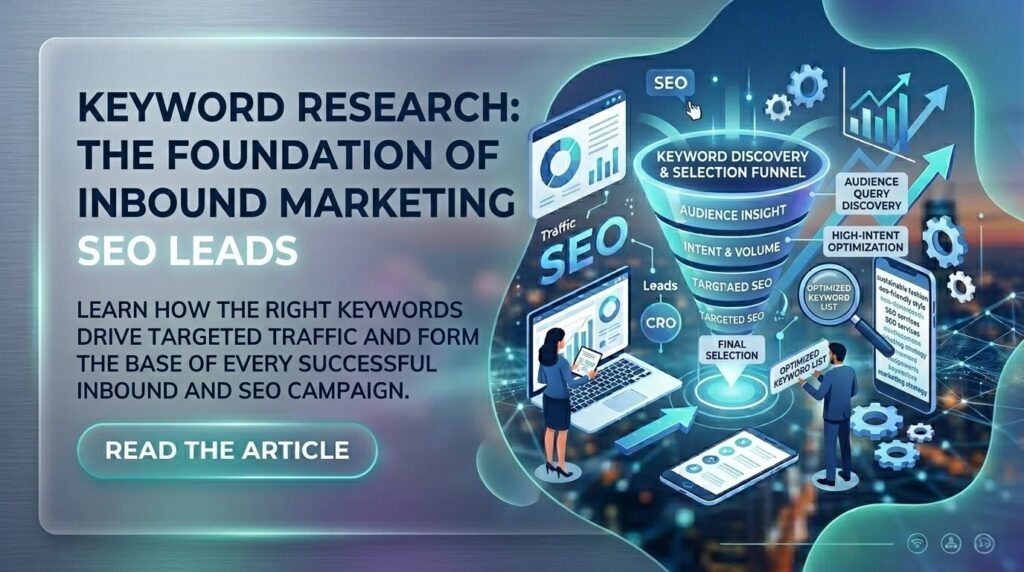
The first step to being able to create content that generates qualified leads is Intent-based keyword segmentation grouping queries into awareness, consideration, and decision stages.
Long-tail keywords, which tend to have lower search volume, often come with higher commercial intent and less competition the highest-ROI targets for expanding sites.
Assigning keywords to buyer personas ensures your content is relevant to the decision-makers you want in your pipeline.
However, there is a crucial distinction between traffic and qualified traffic. If the wrong people are attracted to those keywords then you can rank for thousands of them and gain almost no leads. This is why keyword research (when done right) has less to do with volume, and more to do with alignment. As Moz’s Keyword Research guide points out, the “sweet spot” is finding terms that occupy the intersection between high commercial relevance, achievable ranking opportunity and real search demand. For B2B SEO lead generation specifically, this means getting as granular as possible on industry-specific phrases, role-based searches (e.g. “marketing automation software for enterprise CMOs”), and problem-aware search terms that reflect the terms buyers use when they are fed up with the status quo. You can use tools such as Ahrefs’ Keywords Explorer or Semrush’s Keyword Magic Tool to filter by Keyword Difficulty and CPC at the same time a high CPC is a very good proxy for commercial value since paid advertisers only go hard after terms that convert. When you map these high-intent clusters in your content calendar, you cease creating content for the sake of it and begin doing so under a measurable lead generation mandate.
Lead Generation with Content Marketing: Maturity, Authority and Converting Assets

A comprehensive, long-form piece earns more linkbacks, ranks for more semantically relevant variations in search results and builds more topical authority than thin content — all of which ultimately feeds lead volume.
Lead magnets that are naturally integrated within organic content (or downloadables like templates, calculators, assessments) transform passive readers into known leads with just a single interaction.It is consistently one of the highest-ROI activities in any organic lead gen strategy to update and expand content that already ranks.
That said content marketing for lead gen means a shift in your mindset: every piece you publish must have a conversion path, no matter how small. A 2,500-word guide on auditing a sales funnel shouldn’t close out with a “contact us” CTA it should provide a downloadable audit template, a free consultation or an auto magic calculator. These in-the-content lead magnets often referred to as “content upgrades” by people who know what they’re talking about convert at rates that generic sidebar CTAs never touch. A case study cited ad nauseam by Brian Dean at Back linko found that a content upgrade increased email conversion rates by more than 785 percent over a generic offer — an astonishing number, which illustrates just how powerful relevance is in the moment of highest engagement. Other than conversion strategies, content quality plays a huge role in sustainable organic traffic growth. The successful giving of preference by Google to those few truly helpful content creators became a reality when Helpful Content system was released in live at scale, starting in 2022 and consequently being updated multiple times since with data show that it heavily rewards content that shows first-hand experience on the matter, authenticity of expertise, and real-world usefulness. Pumping out thin, formulaic articles in an attempt to hit keyword volume isn’t just ineffective — it actually risks algorithmic penalties that can tank an entire domain’s organic visibility.
Strategy for Local SEO Lead Generation: How to Capture the Buyers
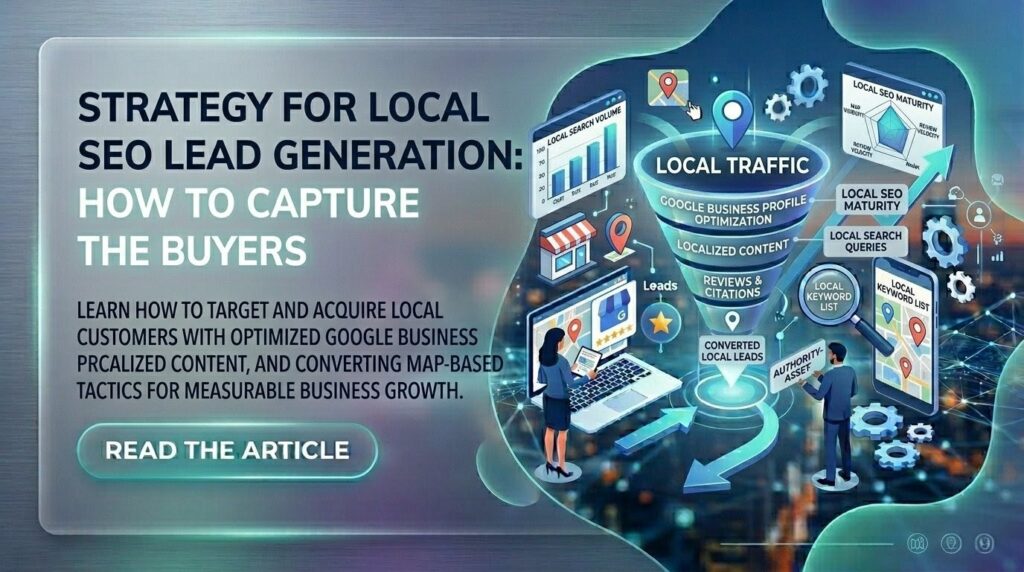
Optimizing Google Business Profile is the number one action with highest leverage for local lead generation, because it directly influences your positioning in map packs and local “near me” searches.
For businesses that serve well-defined geographic markets, localized landing pages targeting city- or region-specific keywords will always blow generic service pages out of the water.
Core trust signals like online reviews, citation presence, and NAP (Name, Address, Phone) consistency across third-party directories are all big influencers on local rankings as well as conversation rates.
For businesses with a geographic footprint professional services firms/ agencies, healthcare providers, contractors a local SEO lead generation strategy is arguably worth more than any national SEO effort. The local map pack, which shows up above traditional organic results for location-intent queries, receives a disproportionate amount of clicks and calls. A single review has been shown to affect the ratings of a local business by an average of 0.67; as well, BrightLocal’s annual Local Consumer Review Survey consistently finds that the overwhelming majority of consumers use online reviews when deciding how to evaluate local businesses, and proximity to the searcher is one of their top considerations about what businesses ultimately they contact. Practically speaking, this means that local SEO is not a “set it and forget it” task. This necessitates premium management of your Google Business Profile (keeping hours, services and photos up to date), accumulating recent reviews continuously, and developing local content that indicates geolocation relevance. A personal injury law firm drawing clients from many cities in its region, for example, should have separate, substantive landing pages for each market rather than a single generic “Services” page because
1.) Google rewards geographic specificity.
2.) the visitor who lands on a page with local relevance is psychologically more likely to trust you.
SEO Conversion Optimization: Converting Traffic Into Pipeline
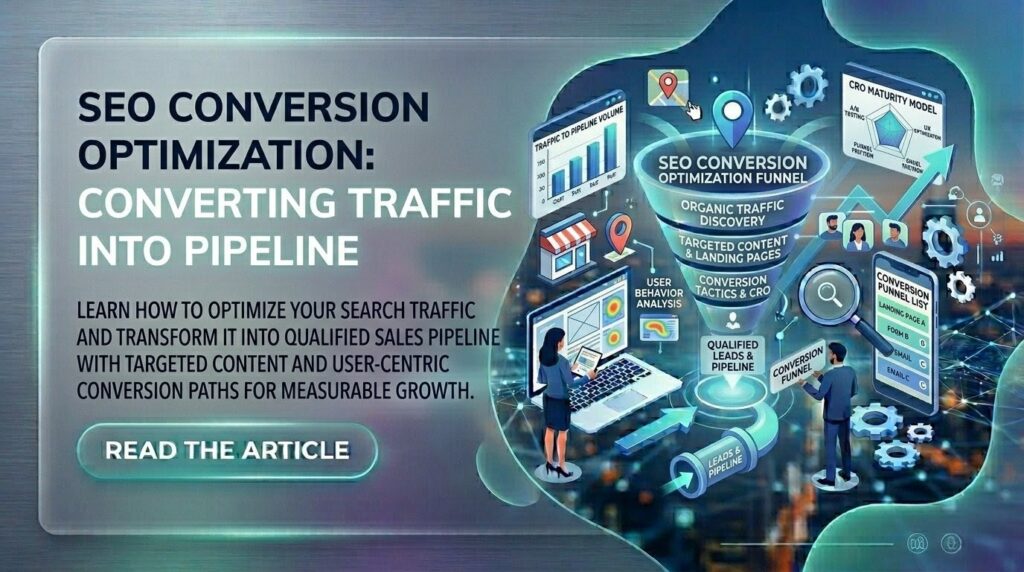
These are not merely technical ranking factors like page speed, mobile usability or Core Web Vitals — they have a direct and measurable effect on your bounce rates and form completion rate.
Placing CTAs, trust signals (certifications, client logos and testimonials) and friction-reducing micro-copy strategically also can drastically increase lead conversion rates without touching one single word of the content itself.
The only way to know what will actually convert your specific audience is A/B testing landing page elements headline phrasing, CTA button color, form length.
The most common and costly failure mode in SEO lead gen is driving organic traffic to a non-converting page. CRO and SEO are not competing priorities; they’re symbiotic. Google’s own research, cited all throughout Search Engine Land’s coverage of Core Web Vitals, showed that as page load time goes from one second to ten seconds in length, a user is 123% more likely to bounce from the webpage. That’s not an SEO statistic; that’s a revenue statistic. Outside of page speed, landing page layout is critically important from a strategic perspective. People landing from organic search are in research mode, not purchase mode they should be greeted with information that helps them understand their problem and how credible you are so that what comes next feels easy instead of pressured. Longer forms (the three to five-field max) always underperform short ones for lead generation 101, as you can always gather further in-depth information later on. Any page targeting commercial-intent keywords should also have social proof in the form of client logos, specific results from case studies and recognizable certifications above the fold. These aren’t design preferences, they’re conversion levers backed up by a solid body of CRO research from companies like Conversion XL (now CXL Institute). Brands who dominate lead gen through organic traffic act like every page they rank has conversion value, and treat the glory pages with the same dedication they would apply to a paid landing page.
If implemented with discipline, an SEO lead generation strategy is one of the very few growth channels that truly compound. Every page you optimize, every link you build, and every visitor who converts and shares your awesome content only makes the whole system that much better. If you start with intent-aligned keyword research, create content assets that support the entirety of the funnel, localize where geography matters and doggedly optimize the conversion experience, organic search will cease to feel like a cost center and become your most trusted source of qualified pipeline.